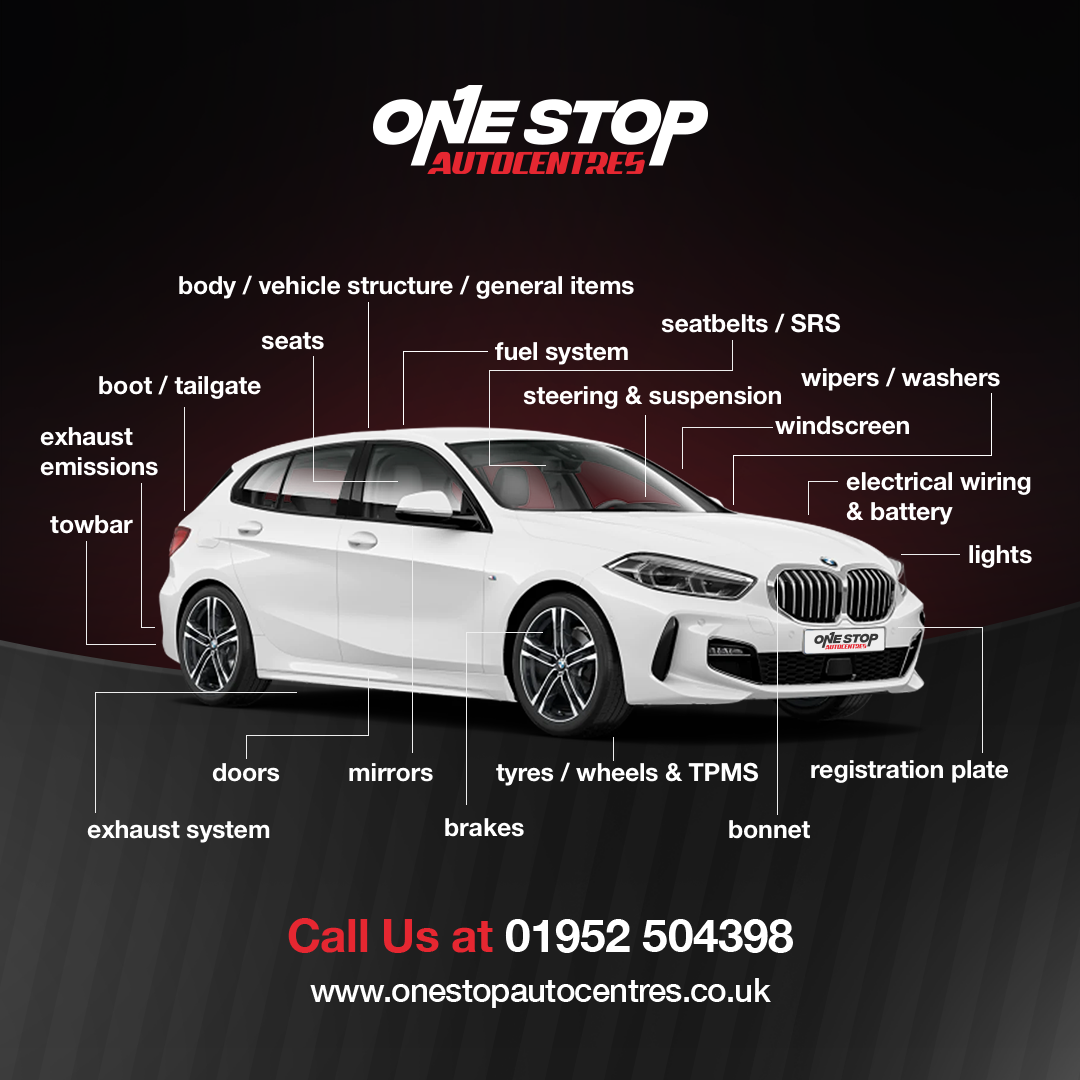
Body, vehicle structure and general items – these must be free from excessive corrosion or damage in specific areas.
Fuel system – should have no leaks, the pipes and hoses are secure and in a good condition and the fuel cap fastens and seals securely.
Exhaust emissions and system – The vehicle will be inspected, depending on the age and fuel type of the vehicle, to check that it meets the rules for exhaust emissions. The exhaust must be secure and complete, a catalyst isn’t missing where one was fitted as standard and it’s without serious leaks and not too noisy.
Seatbelts and seats – the mandatory seatbelts are in place, they are suitable for the vehicle and are in good working order. The seats will be inspected to ensure the driver’s seat can be adjusted and all seats are securely fitted and the seatbacks can be fixed in the upright position.
Doors – Testers will check that the doors can be opened from inside and outside the car and that all openings – including the bonnet and tailgate – can be shut securely.
Mirrors – The vehicle will be inspected to check for the minimum number of mirrors, their condition and security. Indirect vision devices will also be inspected.
Brakes – check their operation and performance (the efficiency test) – the wheels and trims aren’t removed as part of the test and the anti-lock braking system (ABS) and electronic stability control (ESC) (where fitted).
Tyres and wheels – Check that wheels and tyres are undamaged. The minimum legal tyre tread depth is 1.6mm.
Registration plates – The number plate is clean and legible, and the font and spacing of letters must also comply with legal requirements.
Lights – All lamps must be working correctly, including headlights, taillights, indicators (inc. hazard lights), sidelights, brake lights and rear fog lights.
Wipers, washers and Windscreen – These will be inspected to check that they work properly so the driver has a clear view of the road.
Horn – the horn must work, and be loud enough to be audible to other vehicles. Also, ‘novelty’ car horns that play multiple notes or tunes are not allowed.
Steering and suspension – ensure the steering wheel and column are in good condition and fixed properly, and that there isn’t excessive ‘free play’ in the system, the suspension will also be checked to see if it functioning as it should.
 01952 504398